The Black Mamba
The dry sump system on the Black Mamba was not added as an exotic feature or visual talking point. It became necessary because of the car's chassis design, engine position, and steering layout. Like many of the most significant features on the car, it was a direct engineering response to a packaging problem.
After the Mustang body was placed on the Art Morrison chassis, the relationship between the engine and the rest of the structure changed dramatically. The car lost nearly four inches of height in the area needed for engine clearance, immediately affecting both hood clearance and oil pan packaging.
Although hood clearance could be addressed through modification of the hood itself, oil pan clearance presented a far more serious challenge. Neither a front sump nor a rear sump oil pan would adequately clear the chassis crossmember at the rear or the rack-and-pinion steering components at the front.
That left only one real solution: a dedicated dry sump oiling system with an external pump.
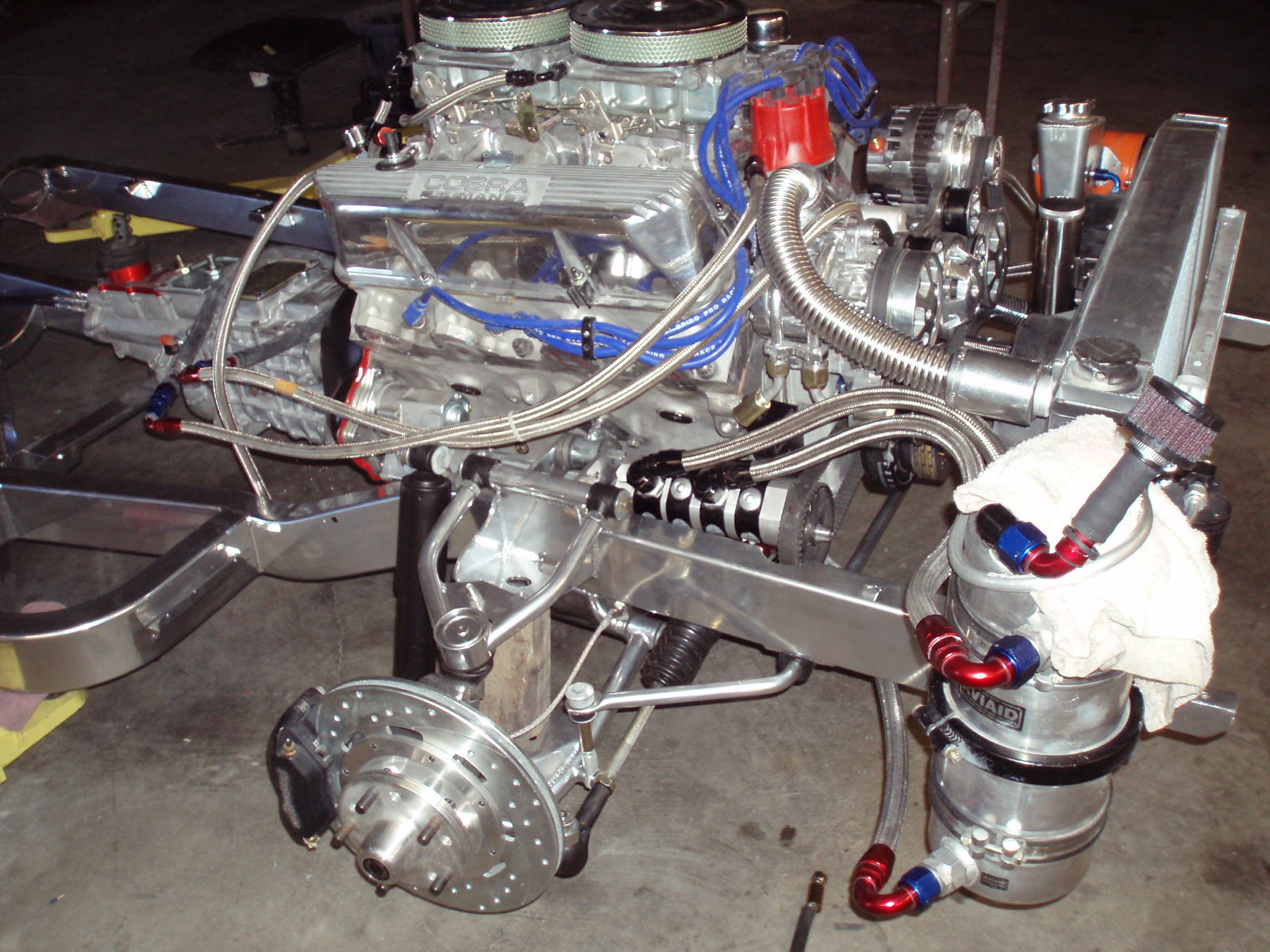
The system selected for the Black Mamba was an Aviaid dry sump setup built around a custom Cobra-style low-profile oil pan. The pan measures approximately three inches deep and includes internal baffling and a windage screen, allowing it to function within the tight packaging constraints created by the chassis and steering geometry.
At the heart of the system is a four-stage Series I dry sump pump. It uses one pressure section and three scavenger sections, all driven by a Gilmer belt system attached to the crankshaft. This arrangement provides oil control and reliability while solving the physical clearance problems that a conventional pan could not.
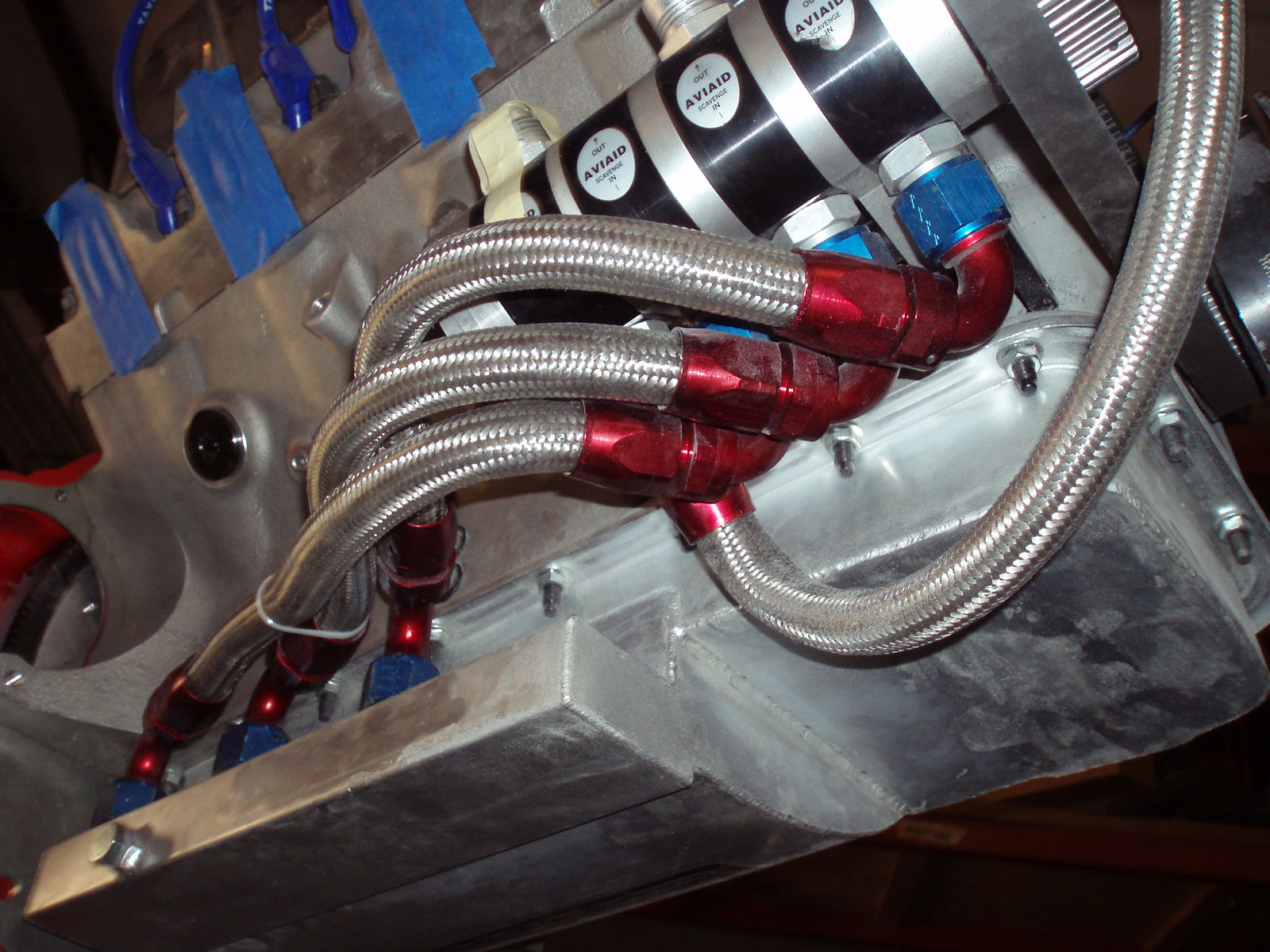
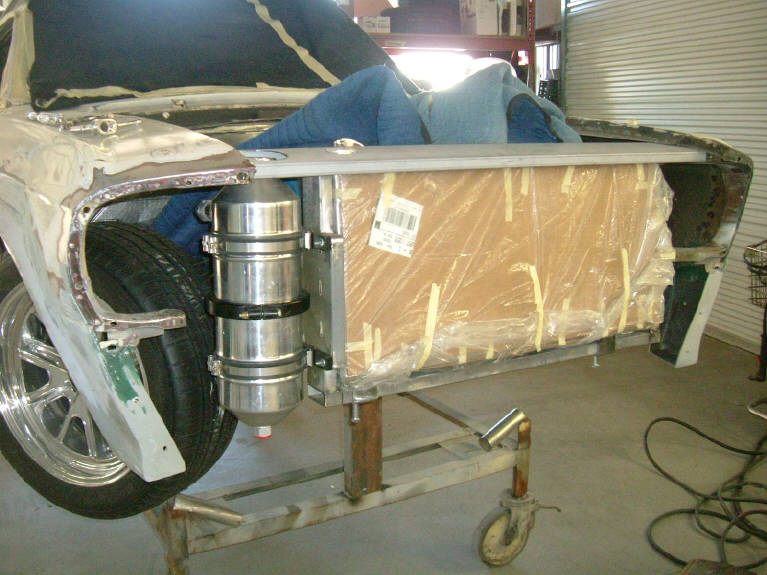
The system also incorporates a remote filter adapter and an external oil reservoir. The tank is an Aviaid six-inch, eight-quart oil reservoir mounted beneath the passenger-side fender well, where it remains largely hidden from view.
This placement preserves the clean appearance of the engine bay while still making full use of the dry sump system's advantages. As with many other features on the Black Mamba, the objective was not only to solve a technical problem, but to do so without compromising presentation.
The dry sump system is one of the clearest examples of how the Black Mamba was engineered as a complete package rather than assembled from unrelated parts. The Art Morrison chassis, steering system, engine placement, hood profile, and oiling system all had to work together.
What might appear to be a specialty performance feature is, in reality, a carefully reasoned solution to the packaging and performance demands of the build. It exists because the car required it.